

Auto-Suggestions
The AI evaluates incoming emails and generates draft suggestions for those that need a reply. Suggestions appear below the incoming message with Accept and Dismiss buttons.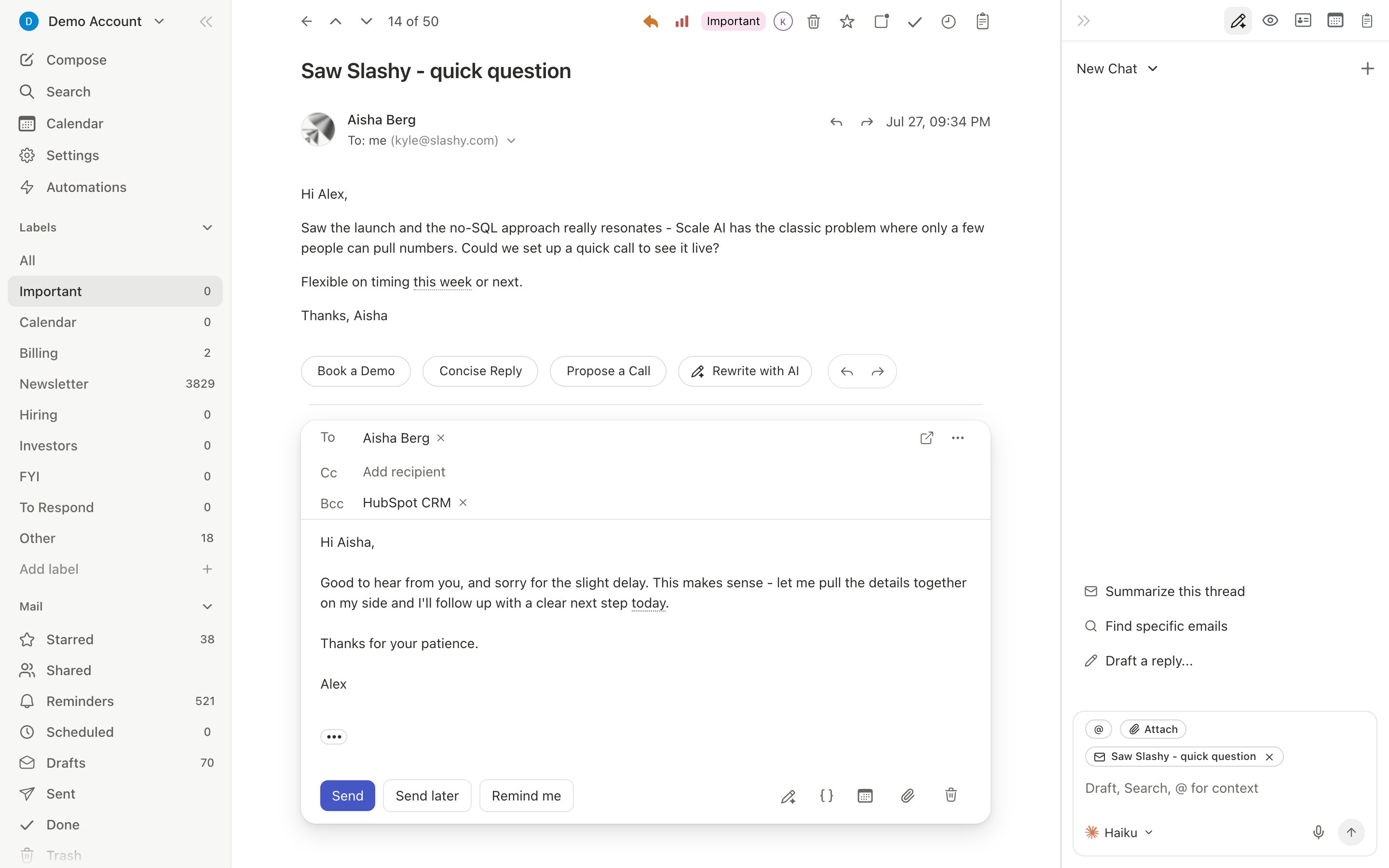
Accepting and Dismissing
- Accept — moves the suggestion into your compose window for review. Does not send.
- Dismiss — removes the suggestion. The AI records this and improves.
- Ignore — suggestion stays but has no effect. No learning signal.
Manual Drafts
PressCmd+Enter while viewing a thread to generate a draft on demand. Or use the agent sidebar (d a): “Draft a reply to this email saying…”
Context Lookup
Before writing, the automatic draft looks beyond the email in front of it. It can check other threads, your calendar, your memories, connected documents, CRM records, and meeting notes, then use what it finds. A reply about a proposal can reflect what was agreed in an earlier thread. Lookup is read-only: it never sends, edits, or deletes anything.Tone Matching
The AI matches your voice using four sources:- Your persona — auto-detected from sent emails during setup
- Your greeting style — how you open emails
- Your memories — explicit style rules you’ve set
- Email history — past conversations with the same recipient
Calendar Validation
When a draft proposes meeting times, the AI checks your Google Calendar first and only offers conflict-free slots. No more proposing times you’re already booked.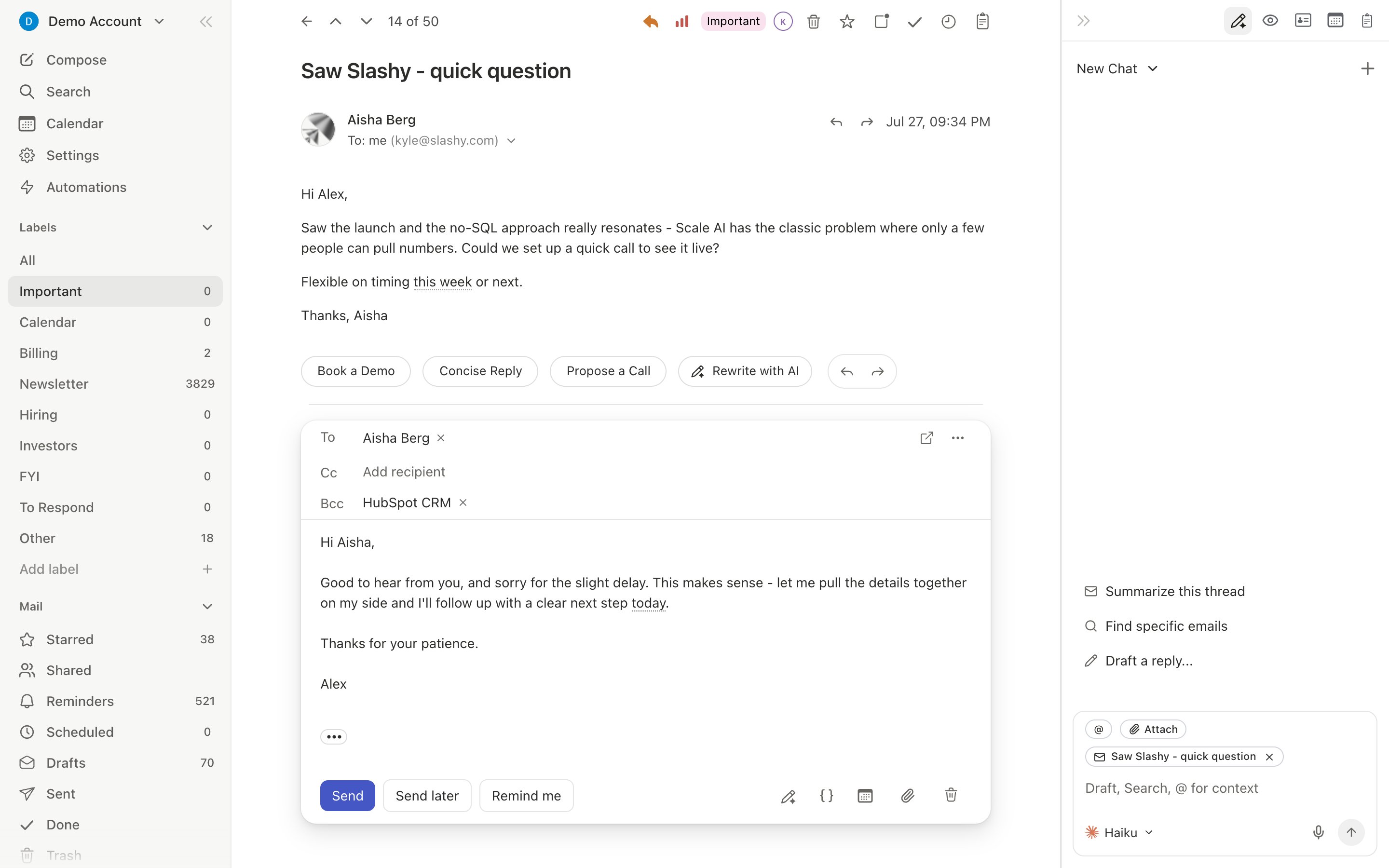
Override Learning
Learning is contextual — editing a sales reply improves sales drafts only.
First week: Actively dismiss bad drafts and edit acceptable ones. Most users see improvement within 10-15 interactions.
AI Editing
After accepting a draft, select text to see the AI edit toolbar: Improve, Fix Grammar, Shorten, Lengthen, and Custom (e.g., “make this more diplomatic”).AI Email Rating
PressCmd+P before sending to get an effectiveness rating with the inferred goal, score, and improvement suggestions.
Models
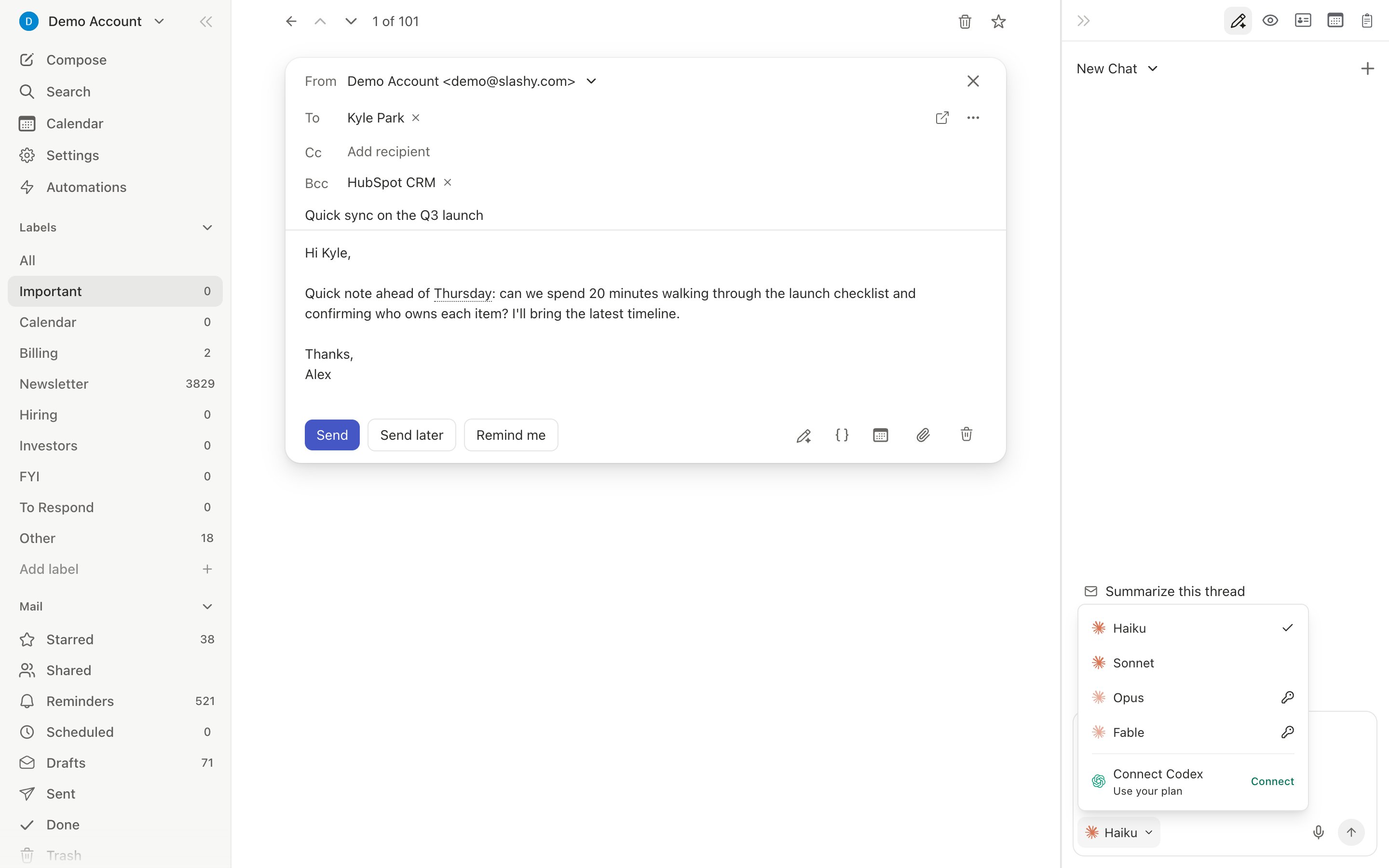
Automatic drafts run on models Slashy manages. To choose the model for agent chat, including Opus and Fable with your own Anthropic key, see AI models in Slashy.Related Articles
Customize Your Agent
Set writing style, memories, and per-contact preferences
Never Miss a Follow-up
Four layers of automated follow-up protection
Signatures
Configure signatures and branding
10 Automations
The most impactful automations to set up